 |
DESCRIPTION OF ASSIGNMENT: In your flash drives you will find a folder with a supplemental film that has been chosen for you. Your assignment is to watch and study this film and to write a plot segmentation of it. The purpose of a plot segmentation is to give you deeper insight into the patterns and structure of a film. It will allow you to see the principles of film form as they play out across the movie. Your plot segmentation should follow the Wizard of Oz's segmentation which is found HERE. PROCEDURE: Watch the film at least twice. First, run it through without stopping it, getting acquainted with the film, and hopefully enjoying it, watching it as you would any film that you see for the first time. During this viewing you should be understanding its plot, getting to know the characters, and absorbing the dramatic situations. Afterwards, watch the film again, this time taking notes, and stopping the film as you see fit in order to begin your segmentation work. This is the most time consuming process of this assignment, so make sure that you give yourself plenty of time to complete it fully. Your plot segmentation must be typed on 8½ x 11 white paper. You must use either Times Roman or Arial font no higher or lower than 12pt. In the rare case that your plot segmentation were to be more than one page, your work must be stapled on the top left corner. Do this before you get to class. Any deviation on these rules will result in a loss of points. DUE DATE: This assignment is due in Elements of Cinema class on November 21, 2013. No late papers will be accepted. Any late paper will receive a grade of 0%. GRADING: This assignment is worth 100 points. |
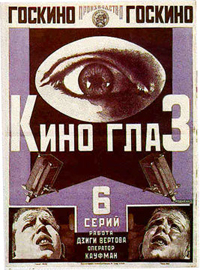 |
The films of Soviet Russia of the 1920s revolutionized cinema. Their breakthroughs are still being used today. In this class, we will study several of these ground-breaking films. Many of the Russian directors also wrote about the art of cinema. They were both theorists as well as artists. Since most of these Soviet films are products of written film theories, it is very important that you prepare by first reading what Donald Cook has to say in your textbook. Here are the reading assignments for Soviet Cinema: Dziga Vertov and the Kino Eye on pp. 116-118; Lev Kuleshov and the Kuleshov Workshop on pp. 118-119; Sergei Eisenstein on pp.122-155. While these experiments were going on in Soviet Russia, two Spanish artists living in Paris were shocking audiences with their surrealistic film. In the 1940s, one of the original French Surrealists, Jean Cocteau, created a surrealistic version of one of the beloved children fairy tales. We will explore Russian formalism and French Surrealism in this Internet Assignment. |
| The Kuleshov Experiment |
| Watch "The Kuleshov Experiment/Effect" below. Also read about the experiment and the effect in your textbook as well as here. |
| There will be a quiz on Dziga Vertov and the Kino Eye, The Kuleshov Workshop, and "The Kuleshov Experiment/Effect" on November 25, 2013. |
| Sergei Eisenstein and The Battleship Potemkin (1925) |
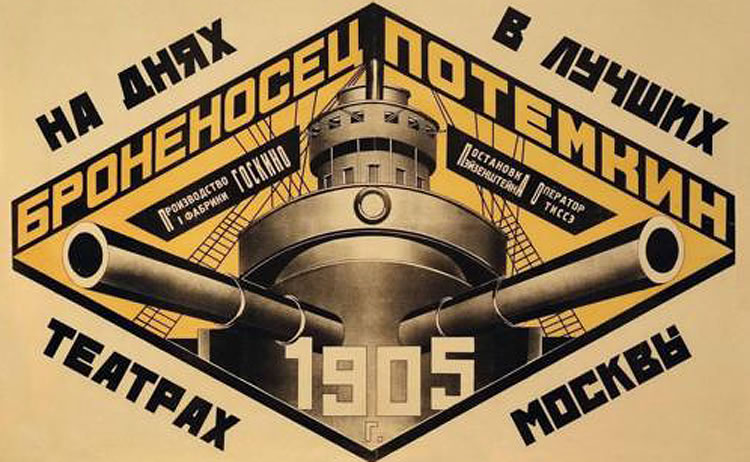
In class you will watch scenes from The Battleship Potemkin (1925) directed by Sergei Eisenstein. After viewing scenes from The Battleship Potemkin, answer the following questions: 1. Describe how Eisenstein adapted Karl Marx's social dialectical progression of thesis, antithesis, and synthesis into the world of film in order to formulate an editing style and a school of thought that now goes by the name of "Soviet Montage." 2. How is "Soviet Montage" evident in "The Odessa Steps" sequence? Write a well-developed essay in which you describe this scene in detail from the point of view of how it is a textbook example of "Soviet Montage." 3. Critic Roger Ebert writes that The Battleship Potemkin "has its greatest impact not by the smooth unrolling of images, but by their juxtaposition to one another." Use the plate-smashing scene as the basis of your essay. Do you agree, or disagree with Mr. Ebert's statement? Write a well-developed essay that supports your thesis. Download Battleship Potemkin Answer Sheet |
| "The Odessa Steps" Sequence from Potemkin | "Breaking a Plate" Sequence from Potemkin |
| This assignment is due on November 26, 2012. |
| October (1928) Directed by Sergei Eisenstein |

In class we will watch a scene from October (1928) directed by Sergei Eisenstein. After viewing a scene from October answer the following question: This sequence is a classic example of Eisenstein's "Intellectual Montage." Clearly it has more meaning in it, than what it shows, i.e., it's more than just about a man going up the stairs! In a well written essay describe the scene in detail (including intertitles), and then go on to explain the real meaning of this sequence. Again, give details that support your findings. Download October Answer Sheet Assignment Due: December 2, 2013 |
| "Un Chien Andalou" (1929) 16 min. Directed by Luis Buñuel & Salvador Dalí |
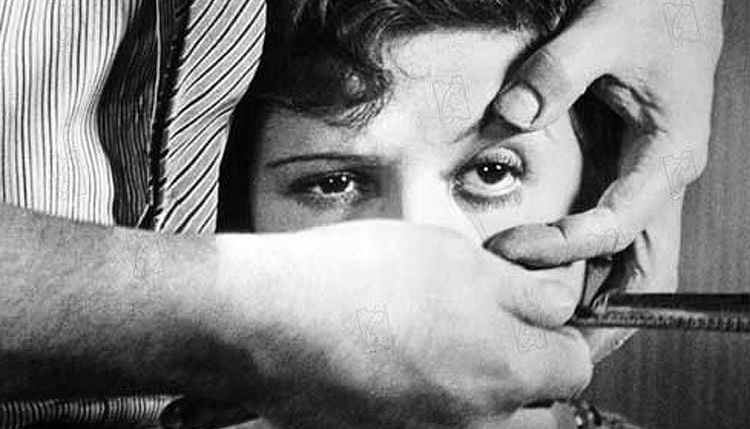
In 1929 Spanish director Luis Buñuel and Spanish artist Salvador Dalí caused a riot in Paris when they showed their surrealist film "Un Chien Andalou." Read Roger Ebert's review of this film by clicking HERE. There will be a quiz on this film on December 3, 2013. |
| La Belle et la Bête (Beauty and the Beast) (1946) 96 min. Directed by Jean Cocteau |
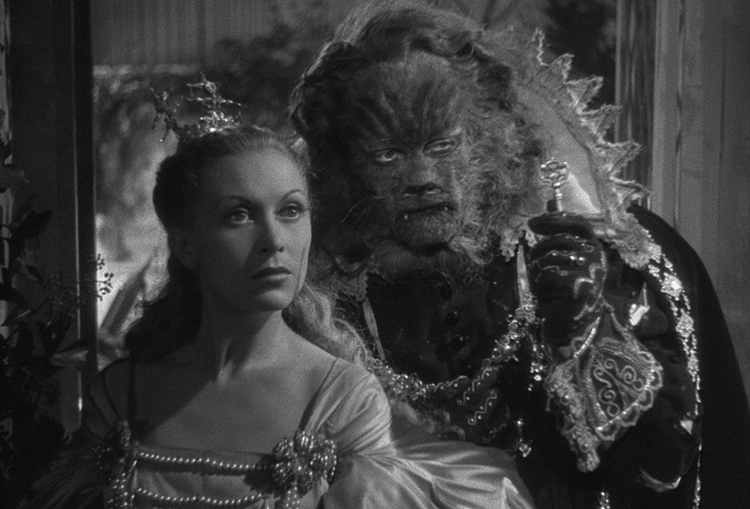 |
Read Roger Ebert's review of this film by clicking HERE. There will be a quiz on this film on December 6, 2013. |