

 |
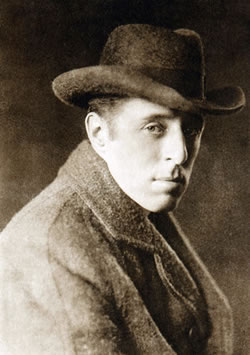
D.W. Griffith (1875-1948) is one of the most important figures in the early history of motion pictures. Some argue that he is the most important of all. Called "The Father of Film," D.W. Griffith revolutionized movies, taking them from their place as a popular but simple narrative form, and transforming them into works that bear the stamp of serious art. This transformation did not happen overnight, but slowly throughout the formative years that Griffith spent as an actor first, and later on as a director of short films. This week we will concentrate on his best short films (from among the hundreds) that he directed between the years 1908-1913 for the American Mutoscope and Biograph Company, better known as "American Biograph," or simply "Biograph." |
 |
During the week read pp. 51-61 in your A History of Narrative Film textbook. Make sure you take notes in your notebook that summarize your reading. Below you will find a number of film terms related to some of the innovations that Griffith developed while at Biograph. Make sure that you memorize these terms, and that you see how they are used in the films that we will see this week. Also, there are a number of questions below that relate directly to the films that we are going to watch. Make sure that you are able to answer these questions as well. |
| Write definitions for the following terms: |
| 1. Setup | 6. Fade |
| 2. 180-degree system | 7. Panning and tilting |
| 3. Full shot | 8. Dissolve |
| 4. Medium long shot | 9. Iris shot |
| 5. Extreme long shot | 10. Mask |
| Write answers to the following questions about the films that we will watch this week. The titles of the films are linked to YouTube in case you missed the film in class, or as a quick way to watch them again for the purpose of study. |
 |
The structure of this famous film stresses comparisons in order to tell a morality tale between the rich and the poor. Explain how D.W. Griffith achieves this. |
 |
Discuss the concept of "parallel action" and how Griffith uses this cinematic device in this film. |
 |
"The Musketeers of Pig Alley" (1912) The close-up shot that occurs in this movie is a very famous landmark cinematic moment. Within the context of the rest of the film, what feeling does it create in you when it comes up? |
 |
What is the attitude of D.W. Griffith towards African-Americans as seen by the character of the house slave George? |

Procedure: On loose leaf define the ten terms found above, and answer all of the questions about the films with complete sentences. Make sure that you also write down the questions. Please, do not type this assignment. Make sure that your work is written in either black or blue ink. Staple all papers before you get to class. NB: Any deviation from the above rules will result in a loss of points. No late homework will be accepted. Any homework handed in late will receive a grade of 0%. Quiz: Study your reading, your notes, the notes that you took on the films that we watched, and the films themselves. There will be a quiz based on all of this material on September 29, 2010. Point Value: Written homework - 40 points; Quiz - 40 points. |
| Go Back to Elements of Cinema HomePage |